Our History
The first Jewish Home was established in 1906 as part of our commitment to meet the needs of Milwaukee Jewry from birth through death. We’ve undergone expansions and change, but throughout our history, our mission of care for the Jewish elderly of Wisconsin has never changed. Explore our history below.
The Early Years: 1906-1930
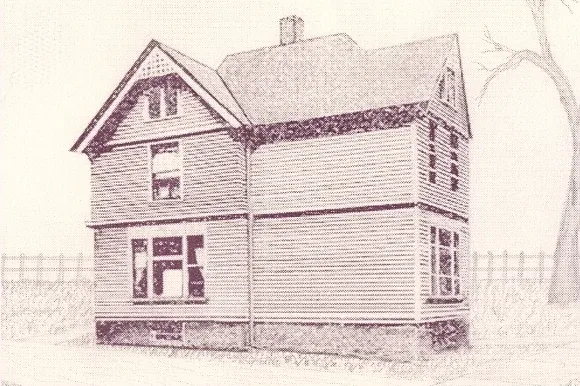
In 1906, the Moshav Zekanim, also known as the Home for the Aged, was established by eight individuals, three men and five women, with the aim of serving the Milwaukee Jewish Community. It provided care for elderly Jews who lacked the family support or financial means to live independently. The B’Noth Israel Society, led by Mrs. B. Rubinsky, played a crucial role in establishing the first Home at 727 Galena Street, Milwaukee. Mrs. Rubinsky, along with other society members, not only fundraised but also volunteered to ensure the residents’ comfort.
By the late 1920s, the increasing needs of the aging Jewish population and the limited space at the Galena Street house prompted the consideration of a larger facility. Nat Stone, a prominent Jewish philanthropist in Milwaukee, contributed the largest local donation of $10,000 for the construction of a new Jewish Home. Mrs. Sig Ruscha spearheaded an unprecedented fundraising campaign, successfully gathering the necessary funds to construct the second Jewish Home.
Building a firm foundation: 1930-1950
The expansion of the second Home began in the 1940s and cost $275,000. The new addition was formally dedicated on September 27, 1950. With the expansion came new services and more professional attention to the residents. The main building housed an infirmary that was financially supported by the Milwaukee Chapter of the National Council of Jewish Women. The facility also had its own medical staff and increased ability to offer recreation. A physical therapy department was formed as doctors of gerontology became increasingly knowledgeable and aware of the need for improving the physical capabilities of the elderly.
Expanding to meet growing needs:
1950-1960
The 1950s marked a significant period in the organization’s history, characterized by increased services offered to residents. It was during this time that professional administrators were employed for the first time, with Ferdinand Rosenthal appointed as the inaugural Executive Director.
As a pioneer in elderly care, the Home garnered the attention of the Wisconsin State Board of Nurses, becoming a training site. It also earned accolades from the U.S. Department of Health, Education, and Welfare for its national impact.
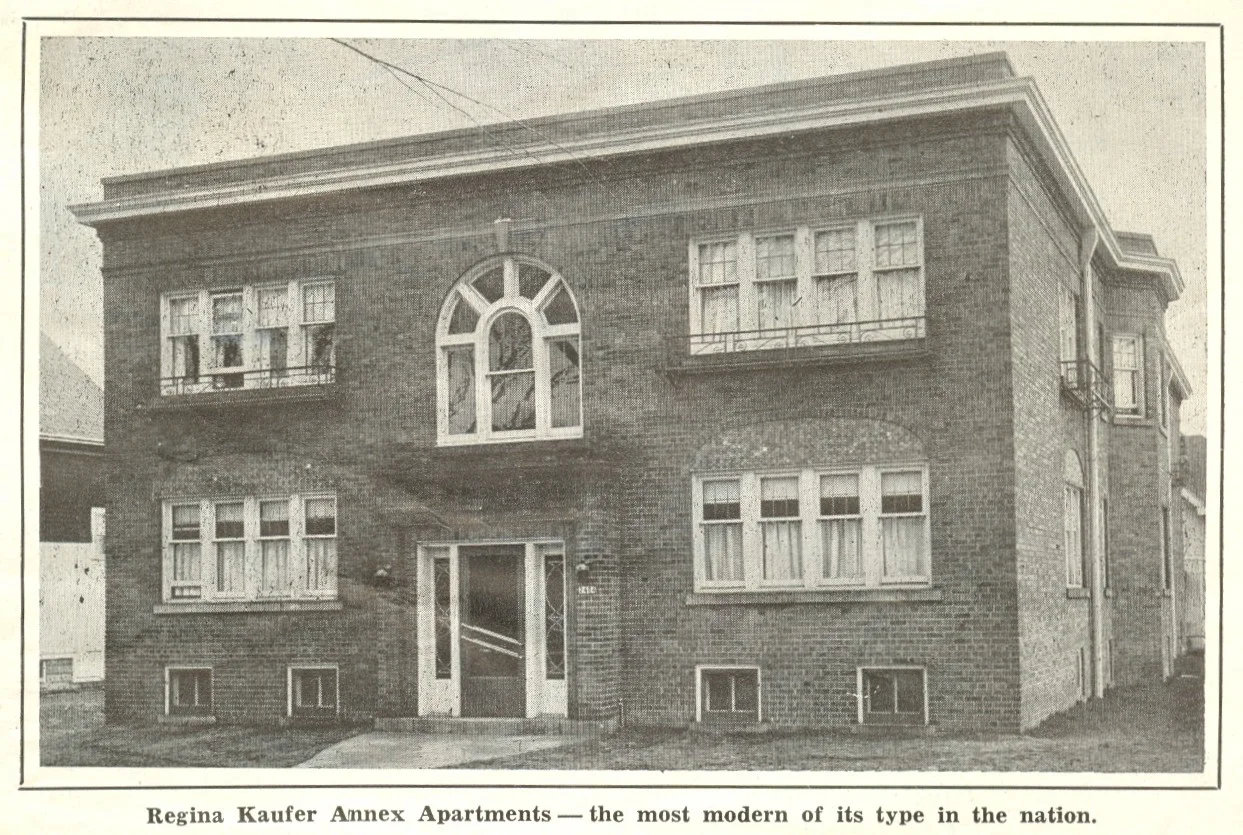
A landmark event was the acquisition of an apartment complex to accommodate 30 residents, funded by Regina Kaufer’s substantial contribution in 1951. The Regina Kaufer Annex was inaugurated for occupancy in 1956.
With its growing prominence, the Home sought to establish connections with Jewish communities in Madison, Appleton, Oshkosh, and Sheboygan. It also strengthened ties with the Jewish Family and Children’s Service and Mount Sinai Hospital, enhancing the coordination of superior services for the elderly.
As the decade concluded, the Home’s commitment to professionalism and quality of care only intensified. It recognized that its focus extended beyond mere custodial care to a broader range of services that enhance life quality. Medical and dental care, psychiatric consultations, podiatric services, and social activities became focal points.
Reflecting the changing demographics and longevity of Americans, the demand for elderly services anticipated for the last quarter of the century grew. The second Home’s capacity had already been augmented with the Regina Kaufer Annex, signaling yet another phase of expansion.
A new home rises along the lakeshore: 1960-1980
The 1960s saw steady growth in the number of residents and the services provided for their care and comfort. Community leaders recognized the need for a larger facility with increased medical and social services. Under the direction of Bernard Soref, Philip Rubenstein, Ben Marcus, and Benjamin Saltztein, over $2 million was raised to build the third Jewish Home on North Prospect Avenue. The impressive facility overlooks Lake Michigan and is located close to the cultural and entertainment center of Milwaukee. In 1973, 115 residents moved in, and two years later, occupancy rose to over 200.
In 1978, Nita Corré, who began her service years before as a volunteer serving tea to residents, became Executive Director.
Years of incredible growth: 1980-2000
Rabbi Arthur Levin became one of the few full-time rabbis serving a Jewish Home anywhere in the nation in 1981. The Rubenstein Family Kosher Oasis opened in 1989 at the Jewish Home and Care Center as the only kosher restaurant in Milwaukee.
Jack Rosen was a volunteer barber at the Home when it was located at 50th Street. Through hard work and dedication, Jack was able to bequeath over $400,000 to the Home, allowing the establishment of the Rosen Hydrotherapy Center.
Other prominent additions included Monya’s Garden in memory of Monya Tolkan, the Rubenstein Pavilion, and the Milton Soref Promenade with a panoramic view of Lake Michigan. After their incredibly generous $2 million challenge grant from their foundation, the entire campus was renamed the Harry and Jeanette Weinberg Terrace.
Groundbreaking for Chai Point Senior Living took place in April 1991. An enthusiastic crowd celebrated the milestone event. The guest speaker was Senator Herb Kohl with Martin F. Stein, Chairman of the Board; Nita Corré, President of the Jewish Home and Care Center; and Board members Lawrence Appel, Avrum Chudnow, and James Plous.
In 1992, our memory care unit opened as a state-of-the-art treatment center for residents afflicted with Alzheimer’s Disease and other dementias. It was developed to be not only a residential memory care facility, but an institution known for research and education. It continues to be recognized nationally and internationally as an innovative and respected leader in the senior care industry.
The Milwaukee Jewish Home merged with the Milwaukee Jewish Convalescent Center in 1994.

Continuing to meet the needs of our community: 2000 to today
In 2005, the Sarah Chudnow Community opened on 20 acres in Mequon fueled by the vision and financial commitment of the Chudnow family to honor their matriarch, Sarah. (The Sarah Chudnow Community was sold in October 2020). In 2013, Adult Day Services were expanded, welcoming participants from other senior living’s discontinued programs, and expanded into memory enhancement programs and services, including for those with Young-Onset Alzheimer’s. And, in 2015, we established our Research Department with the goal of finding low-cost and considerate interventions to help our residents lead less painful and longer lives, while advancing eldercare research worldwide.
In 2020, our residential population included 80% Jewish residents at Ovation Communities. Currently, 70% of residents at the Jewish Home and 22 percent at Chai Point are receiving some type of governmental assistance to help pay for their care.
In September 2023, Ovation Communities embarked upon an exciting new chapter in its storied history with the opening of our new memory care center, Kavod Terrace, located on the campus of the Jewish Home and Care Center. This state-of-the-art facility, featuring a sensory stimulative environment where those living with memory loss are enriched by music and the arts, provides residents with a relaxing lifestyle that offers all the comforts of home. Kavod Terrace also has the distinction of being one of the very few memory care centers certified by LeadingAge Wisconsin as a Dementia Specific Facility.
Our Mission speaks to the strength of our Foundation in being able to work with families and provide services for their loved ones, regardless of their ability to pay. The guidance of our past and current leadership keeps us on the path of fiscal responsibility in honor of those whose hard work and earnest vision paved the way for the successful organization we are today.
Today, our communities have become a gathering place for the Jewish Community. Entertainment, lectures, political discussions, and other group activities take place on each campus to engage and inform both the residents and community members.